Digital Sky
How a shared economy model makes drone technology accessible to everyone.
How a shared economy model makes drone technology accessible to everyone.

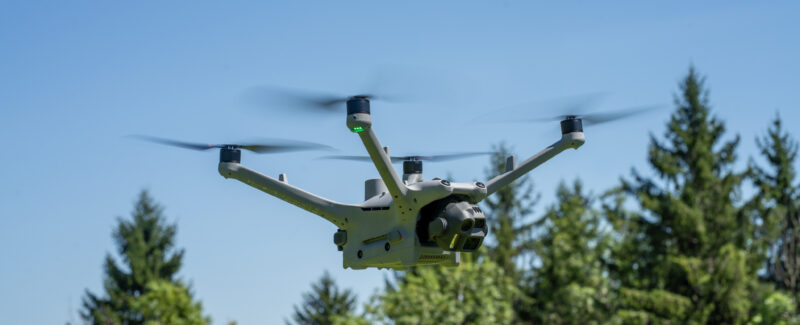
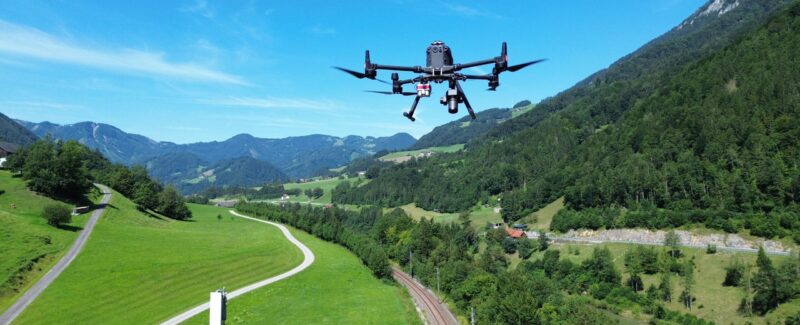
Dock 3 + Matrice 4 Series

BMF

2025-2026
With Digital Sky A project is emerging in Austria that has the potential to fundamentally change the drone market. What is often associated with high costs, complex processes, and specialised expertise today is intended to function as easily as an online order in the future. The goal: to make drone services accessible to everyone – for municipalities, businesses, and private individuals alike.
The project centres on a web-based platform that allows users to specify their desired drone deployment. Location, timeframe, and purpose are entered, and the rest happens automatically. The drone is launched from a nearby hub, carries out the task autonomously, and then transmits the results directly via the platform. Many datasets are already pre-analysed, meaning they can be used without prior technical knowledge. This seamless process is made possible by modern technologies such as 5G connectivity, edge and cloud computing, and a high degree of autonomy in flight planning and data analysis.
The project is designed in several development stages. The first phase will establish the legal, technical, and economic foundations, followed by a test implementation in a pilot community. In the long term, the system is to be rolled out in several cities and regions, creating a dense network of drone hubs that are ready for use at any time. This modular structure makes it possible to operate Digital Sky sustainably while also scaling it flexibly.
The potential applications are wide-ranging, from surveying, building and infrastructure monitoring to environmental and thermal analyses. For municipalities, the platform can help document land sealing, discover illegal dumping, or monitor flood areas, for instance. Companies benefit from quick inspections of their facilities, while private individuals can commission roof photography, property surveys, or solar panel checks, for example. Digital Sky also plays a crucial role in disaster control: authorities can use drones in real-time for search operations, fire monitoring, or to assess damage after severe weather.
A key element of the project is the shared economy principle. By operating drones centrally and deploying them according to need, high purchase costs and training expenses for users are eliminated. Studies show that a hub in a medium-sized city can be operated profitably with as few as around 1,200 deployments per year. This model is supplemented by private investment, which enables expansion and further technical development.
Digital Sky also places a strong emphasis on sustainability. Drones are replacing heavy equipment in many areas, reducing CO₂ emissions and allowing for particularly gentle observation of natural areas. Whether in agriculture, urban green spaces, or sensitive ecosystems – precise, non-invasive measurements support environmentally conscious planning and protect natural resources. At the same time, the system improves public safety, as critical situations can be detected more quickly and emergency services can be supported more efficiently in crisis situations.
At its core, Digital Sky is far more than a technological project. It is a societal approach that brings drone technology out of its niche and integrates it into everyday life. By automating complex processes and reducing costs, access to modern applications is democratised. Communities, businesses, and citizens alike benefit from data-driven decisions, increased safety, and more sustainable solutions. Digital Sky thereby creates a foundation for a digital, more resilient, and ecologically responsible Austria – and makes the skies a little bit smarter.